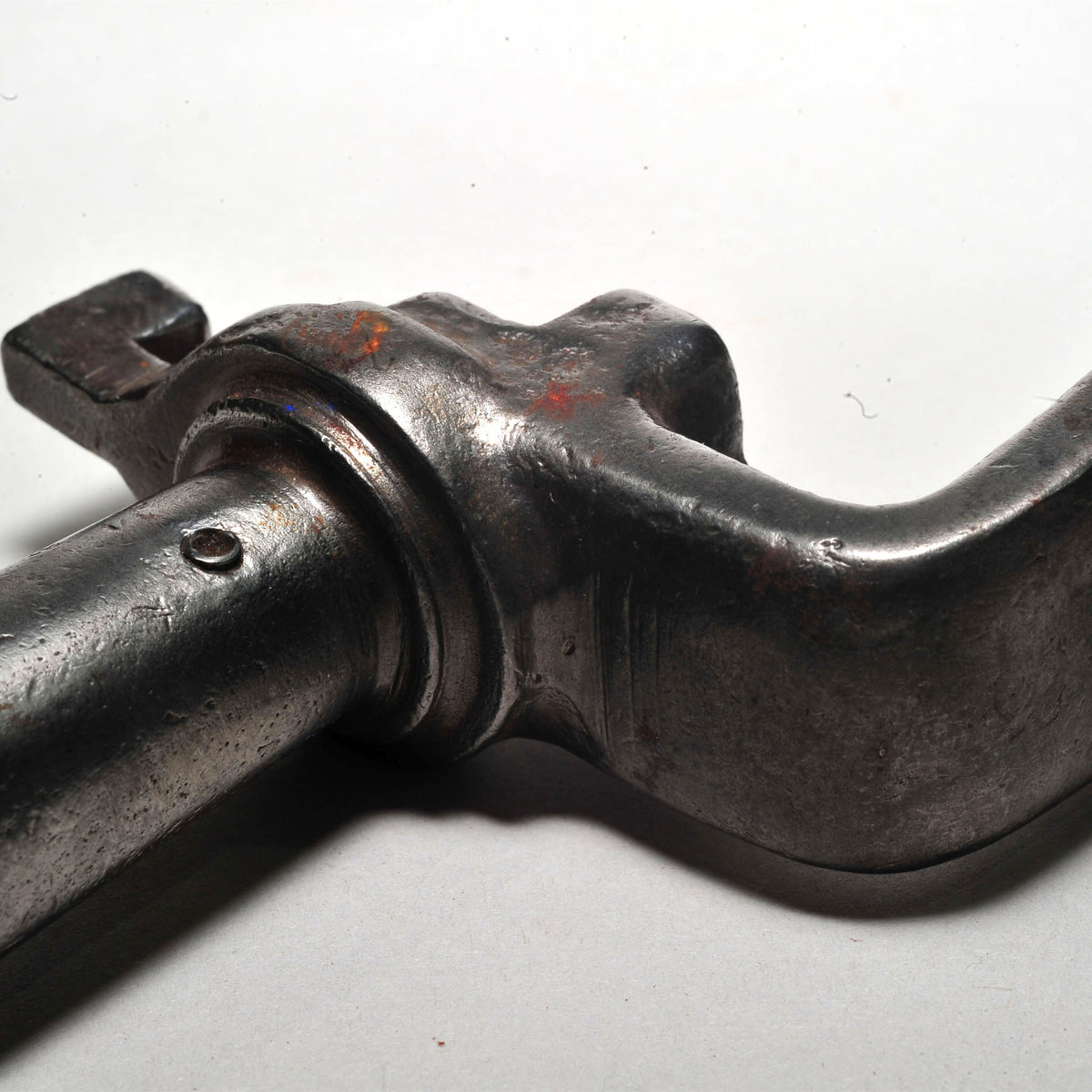
This piece has found a new home.
Sold and archived in The Vault — kept here so its story stays part of Streampunk, even after it's left the shop.
Streampunk
Antique Steam Locomotive Steel Brake Handle
Antique Steam Locomotive Steel Brake Handle
Regular price
R 350.00 ZAR
Regular price
Sale price
R 350.00 ZAR
Taxes included.
Shipping calculated at checkout.
Quantity
Couldn't load pickup availability
Rare transport collectable. very good condition with a slight spot of surface rust. The removable brake handle is mostly associated with 19th-century and early 20th-century steam locomotives, particularly on British and some European railways, where it served as both a practical operating tool and a simple security measure. The brake handles on many early steam locomotives were made removable primarily for safety and security.
Backstory
Backstory
 The brake handles on many early steam locomotives were made removable primarily for safety and security, though there were a few practical reasons as well.
Prevent unauthorized movement
The brake handle (often called a brake crank or brake wheel handle) could be removed when the locomotive was unattended.
Without the handle, it was much more difficult for someone to release the hand brake and move the locomotive.
This acted as an early form of "security key."
Reduce theft and vandalism
Railway yards and sidings were often accessible to workers and the public.
Removing the handle prevented curious people from tampering with the brake mechanism.
Avoid obstruction in the cab
On many locomotives, the brake handle projected into the cab.
Removing it when not needed created more working space and reduced the chance of crew members bumping into it.
Mechanical advantage
Early hand brakes used a long removable lever that provided the torque needed to tighten the brake blocks against the wheels.
Once the brake was firmly applied, the handle itself was no longer required because the screw mechanism was self-locking.
How it worked
Most early locomotives used a screw hand brake:
The crew inserted the removable handle into a square socket.
They turned it several revolutions to tighten a large screw.
The screw forced brake shoes against the wheels.
The handle could then be withdrawn while the brake remained fully applied.